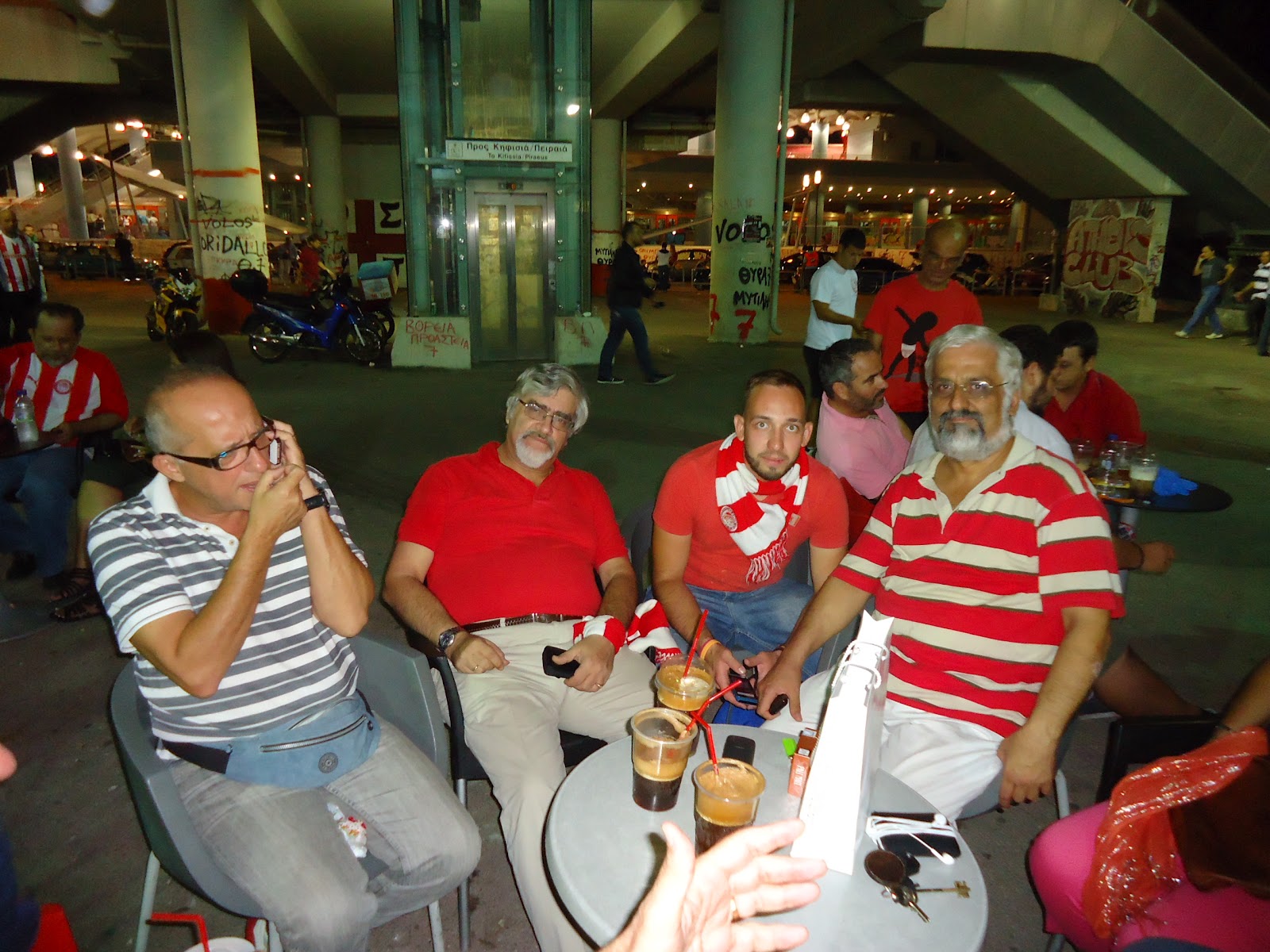
Το γκολ το πέτυχε στο 44΄ ο Χοσέ Χολέβας.
Ο Ολυμπιακός δεν βλεπόταν. Πλην του Ιμπαγάσα (και για όσο έπαιξε, μέχρι που... έσκασε και έπεσε ξερός στο χορτάρι), όλοι οι άλλοι ήσαν στον κόσμο τους - ο καθένας στο δικό του. Μια μπαλιά σωστή είναι ζήτημα αν δόθηκε. Κλωτσάγανε τη μπάλλα μακριά με το... μύτο, σαν να μην ξέραν τί άλλο να την κάνουν. Ο Κάρρολ έκανε... καθυστέρηση με κάθε τρόπο. Ο Ματσάδο ούτε ήξερε πού πάταγε και πού πήγαινε, συνήθως μάλιστα κουτούλαγε πάνω σε συμπαίκτες του. Κάποια χρονική στιγμή παίξαμε με τρία δεξιά μπακ και τρεις στόπερ! Στο τέλος του αγώνα πρέπει να ήμουν ένας από τους εν συνόλω 23 θεατές που δεν γιούχαραν την ομάδα για την... εμφάνισή της - όχι για τίποτε άλλο, αλλά γιατί δεν είχα ούτε την ελάχιστη δύναμη να ανασάνω από αυτά που είχαν δει τα μάτια μου.
Ο Αστέρας Τρίπολης στάθηκε αξιοπρεπέστατα στον αγώνα. Ήξερε τί ήθελε μέσα στο γήπεδο και το αναζήτησε μεθοδικά. Έχασε ευκαιρίες όχι μόνο για το χι, αλλά και για το διπλό.
Δεν είναι καθόλου καλά τα πράγματα. Εμένα δεν με ξεγελάνε τα διάφορα 6 Χ 6 και τα τοιαύτα - αυτά είναι για κάφρους και για μόμολα. Δεν είναι για Γαύρους.
Από το βιβλίο του σύγγαυρου Βασίλη Καρδάση "Ταξίδι στο χρόνο - Πρόσωπα και στιγμές του Ολυμπιακού, 1925-2004", Εκδόσεις Ελληνικά Γράμματα, Αθήνα 2004, σελ. 21.
Αξιοπρεπέσταη εμφάνιση του Ολυμπιακού στα Έμιρατς. Το σκορ είναι πλασματικό μεν, η ήττα είναι όμως ήττα. Γκολάρα του Κώστα Μήτρογλου στο 1-1. Σε κακή βραδιά η Άρσεναλ, σε καλή βραδιά ο Θρύλος. Η διαφορά "βάρους" των δύο ομάδων ήταν η αιτία της ήττας.
Από το βιβλίο του σύγγαυρου Βασίλη Καρδάση "Ταξίδι στο χρόνο - Πρόσωπα και στιγμές του Ολυμπιακού, 1925-2004", Εκδόσεις Ελληνικά Γράμματα, Αθήνα 2004, σελ. 31.
Historians are to nationalism what poppy-growers in Pakistan are to heroin-addicts: we supply the essential raw material for the market.
-------
The test of a progressive policy is not private but public, not just rising income and consumption for individuals, but widening the opportunities and what Amartya Sen calls the 'capabilities' of all through collective action. But that means, it must mean, public non-profit initiative, even if only in redistributing private accumulation. Public decisions aimed at collective social improvement from which all human lives should gain. That is the basis of progressive policy—not maximising economic growth and personal incomes. Nowhere will this be more important than in tackling the greatest problem facing us this century, the environmental crisis. Whatever ideological logo we choose for it, it will mean a major shift away from the free market and towards public action, a bigger shift than the British government has yet envisaged. And, given the acuteness of the economic crisis, probably a fairly rapid shift. Time is not on our side.
-------
Many years later, another Marxian rephrased this as the choice between socialism and barbarity. Which of these will prevail is a question which the twenty-first century must be left to answer.
-------
But a progressive policy needs more than just a bigger break with the economic and moral assumptions of the past 30 years. It needs a return to the conviction that economic growth and the affluence it brings is a means and not an end. The end is what it does to the lives, life-chances and hopes of people. Look at London. Of course it matters to all of us that London's economy flourishes. But the test of the enormous wealth generated in patches of the capital is not that it contributed 20%-30% to Britain's GDP but how it affects the lives of the millions who live and work there. What kind of lives are available to them? Can they afford to live there? If they can't, it is not compensation that London is also a paradise for the ultra-rich. Can they get decently paid jobs or jobs at all? If they can't, don't brag about all those Michelin-starred restaurants and their self-dramatising chefs. Or schooling for children? Inadequate schools are not offset by the fact that London universities could field a football team of Nobel prize winners.
-------
The Labour party on the whole has not been a very effective opposition since the election, partly because it spent months and months electing its new leader. I think the Labour party should, for one thing, stress much more that for most people in the past 13 years, the period was not one of collapse into chaos but actually one where the situation improved, and particularly in areas such as schools, hospitals and a variety of other cultural achievements—so the idea that somehow or other it all needs to be taken down and ground into the dust is not valid. I think we need to defend what most people think basically needs defending and that is the provision of some form of welfare from the cradle to the grave.


.JPG)